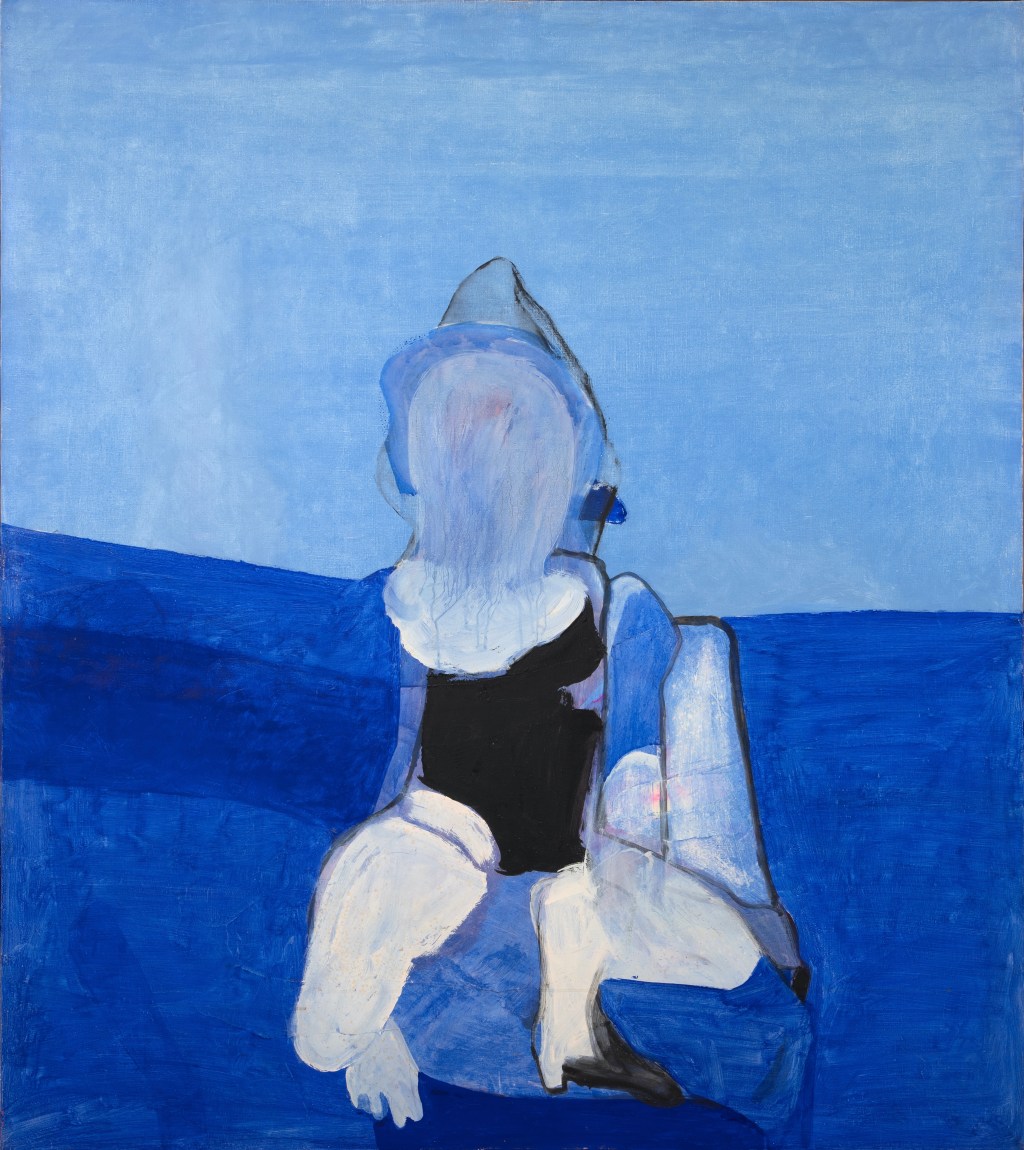
“When I am not painting, I feel like a car without a driver: I’m getting rusty,” artist Teresa Pągowska wrote in 2001. “A painting may arise from a dream. The most important dreams cannot be revealed; it is to me that they present themselves. They will leave their marks on paintings.” Born in Warsaw in 1926, Teresa Pągowska is a key figure in 20th century Polish art, recognised for her intimate depictions of the female form and her innovative experiments in the medium of painting. She studied painting at the State Higher School of Fine Arts in Poznań, under the Colourist Wacław Taranczewski, before moving to Sopot in 1950 and becoming affiliated with the Academy of Fine Arts in Gdańsk, where she taught for over ten years.
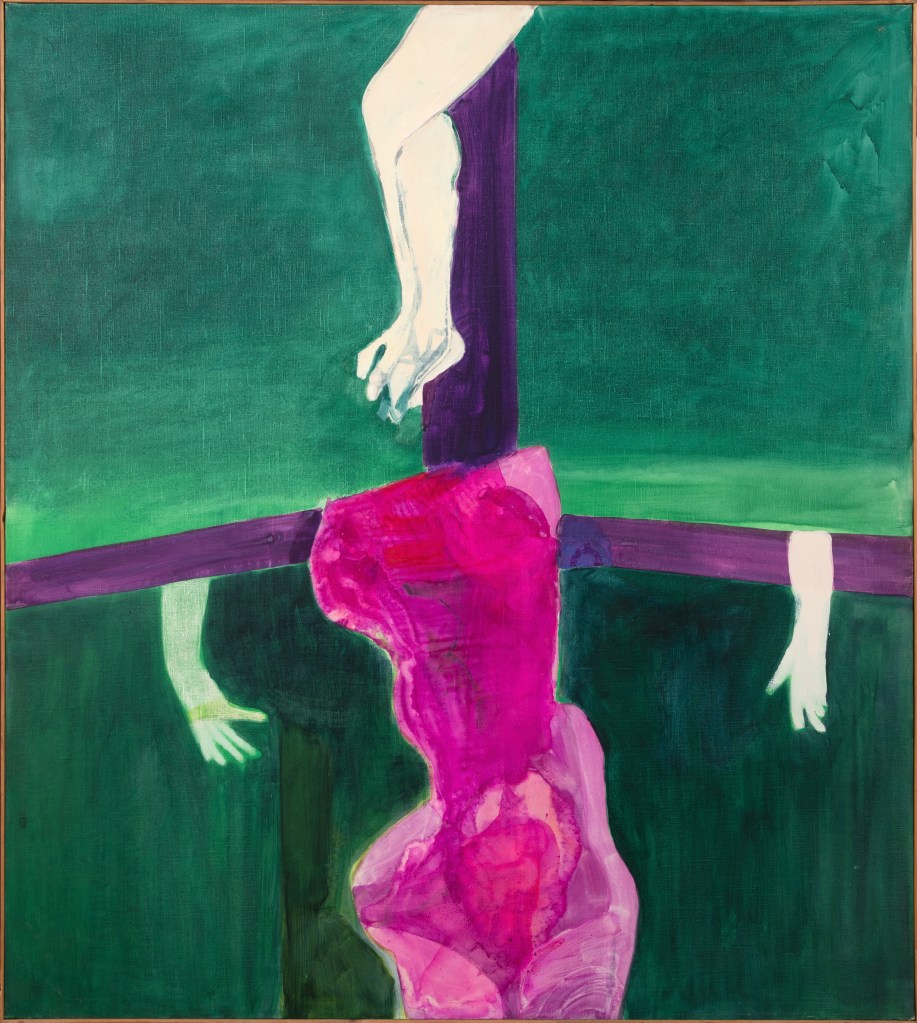
Pągowska participated in the All-Poland Exhibition of Young Art. Against the War – Against Fascism, the landmark show which was held at Warsaw’s Arsenal in 1955, and also the First Paris Biennale at the musée d’Art moderne de la Ville de Paris in 1959.
‘Shadow Self’ at the Thaddaeus Ropac Gallery in London, running until 2nd April 2025, is an arresting, visually evocative exhibition so titled because it contains the motif of the shadow as a thread throughout the show. I would advise all reading this to run, not to walk, to see it before it closes – it really is a unique exhibition and one to spend time contemplating. “Shadows hinge the body to its environment: they simultaneously exist in and defy the material world,” the programme from the gallery notes: “by tracing their elusive forms with paint, Pągowska reveals the secret or fantasised parts of the self: our desires, fears or impulses.”
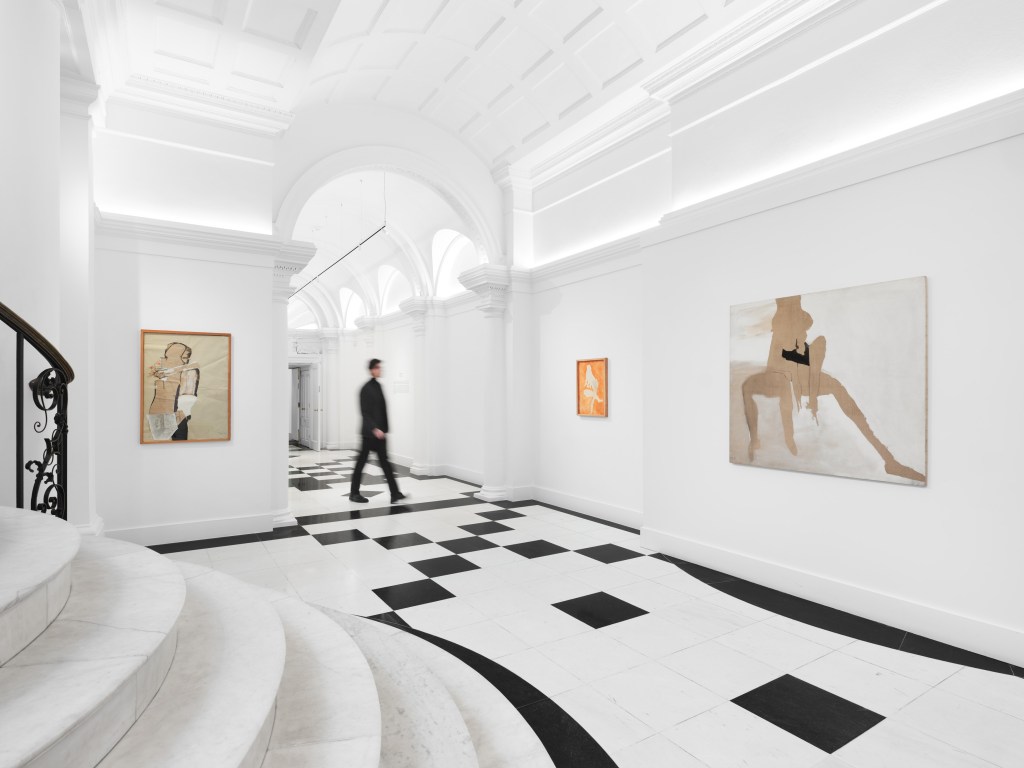
tempera on canvas
Alongside the paintings featuring shadowy female forms, complex in composition and psychologically intriguing, I particularly liked the artist’s depictions of dogs in the exhibition: shadowy canine forms appear at the feet of female figures, looking up obediently at their mistresses or else sitting in a typical doglike across interiors. From the late 1980s onwards, Pągowska had started to introduce animal life into her paintings, and in the 1990s and 2000s, she began to paint hybrid animal-human creatures, creating mysterious interspecial characters.
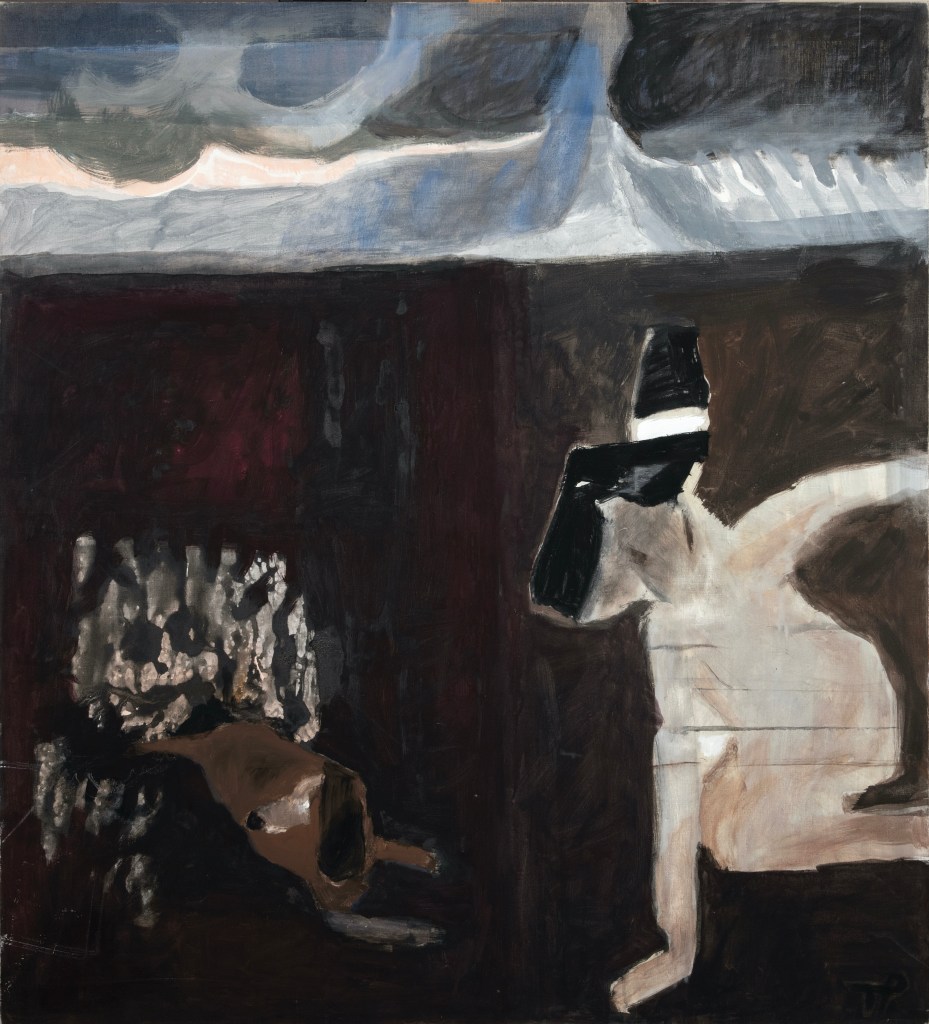
tempera on canvas
In terms of process, Pągowska collected and repurposed found, everyday materials including magazines and wrapping papers, “drawn to their irregular, tactile surfaces” (Thaddaeus Ropac Gallery). These materials give to the artist’s work a transient quality, mixing the everyday ephemeral culture to the timelessness of oil painting as a medium.
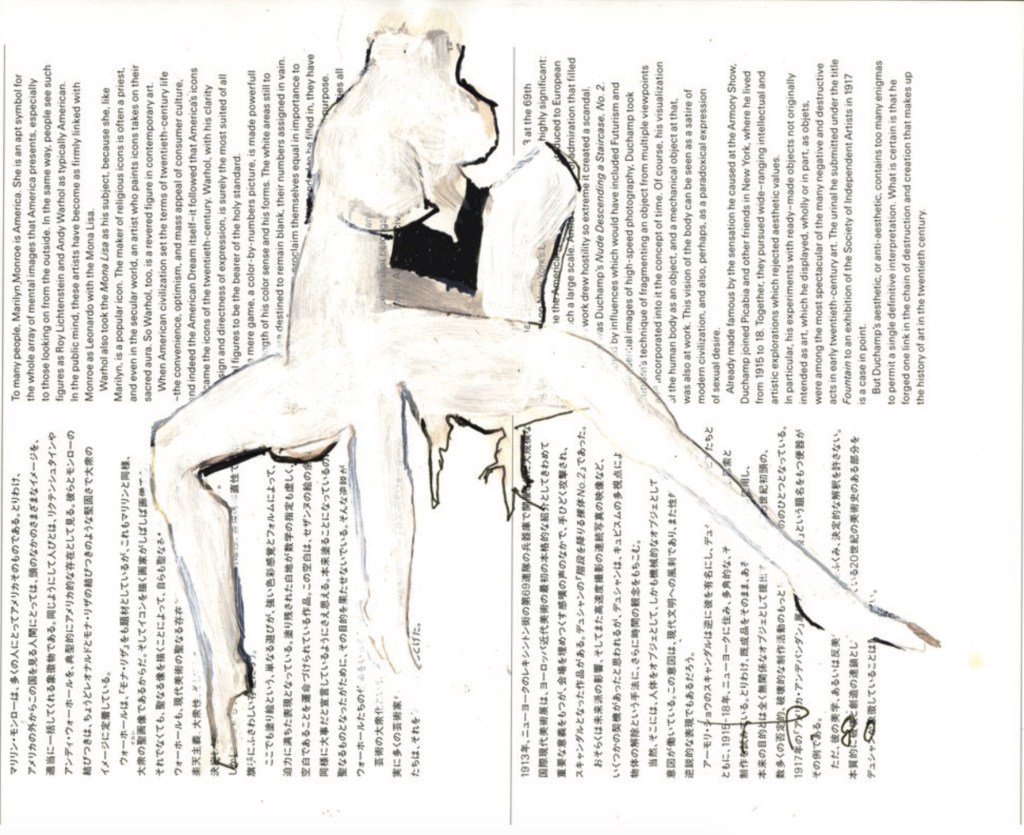
In 2022, Pągowska received an honorary doctorate from the Academy of Fine Arts in Gdańsk. Her legacy in art history continues to grow, with more and more people becoming aware of her work and being inspired by her sprawling canvases and the shadowy worlds within.
IMAGE TOP: Untitled, 1966. Oil on canvas. Courtesy Teresa Pągowska Estate and Thaddaeus Ropac gallery, London · Paris · Salzburg · Milan · Seoul
 Cultural Capital