We are grateful to Manolo Valdes for giving us this interview in March 2025:
1. What was your initial inspiration for the Library?
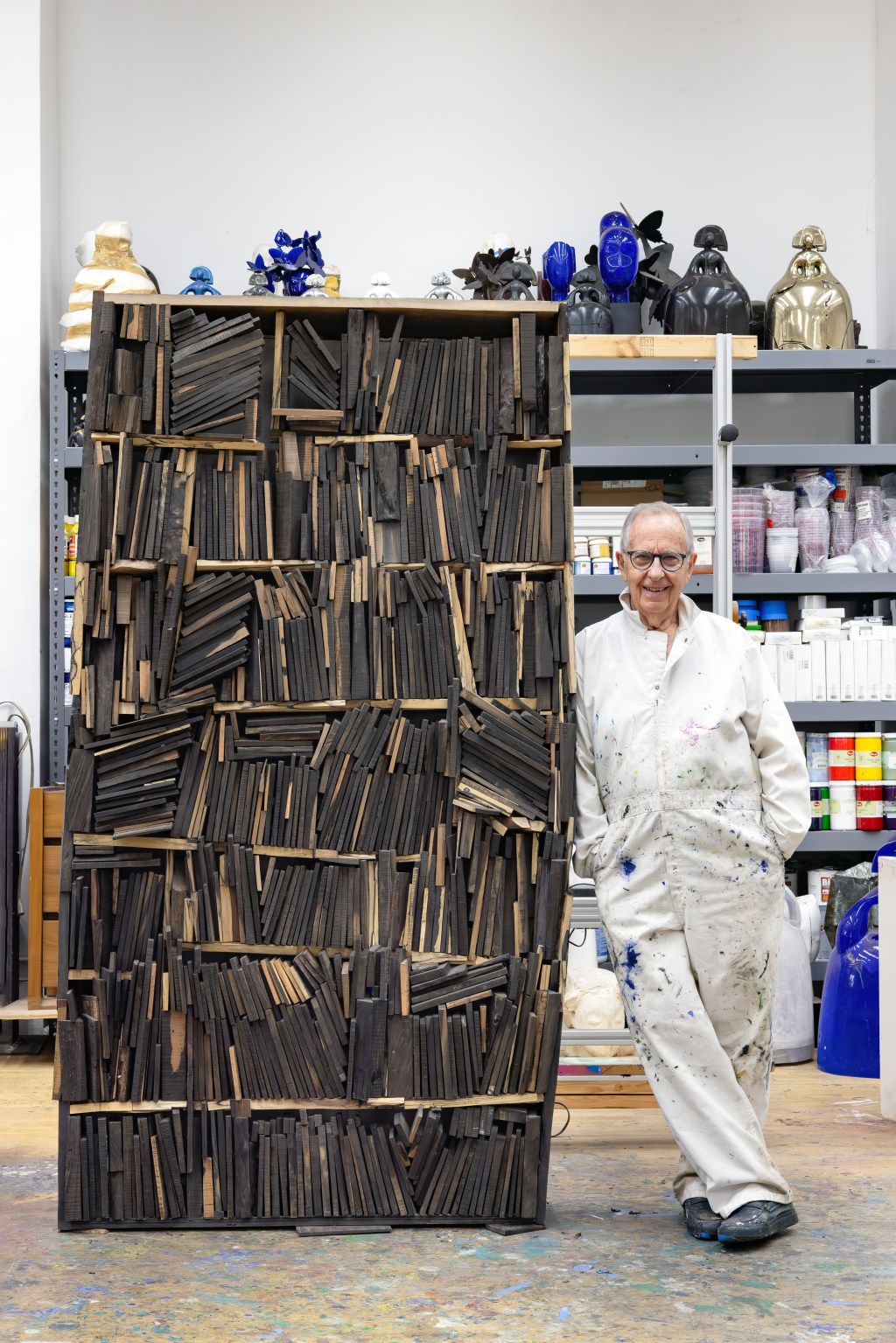
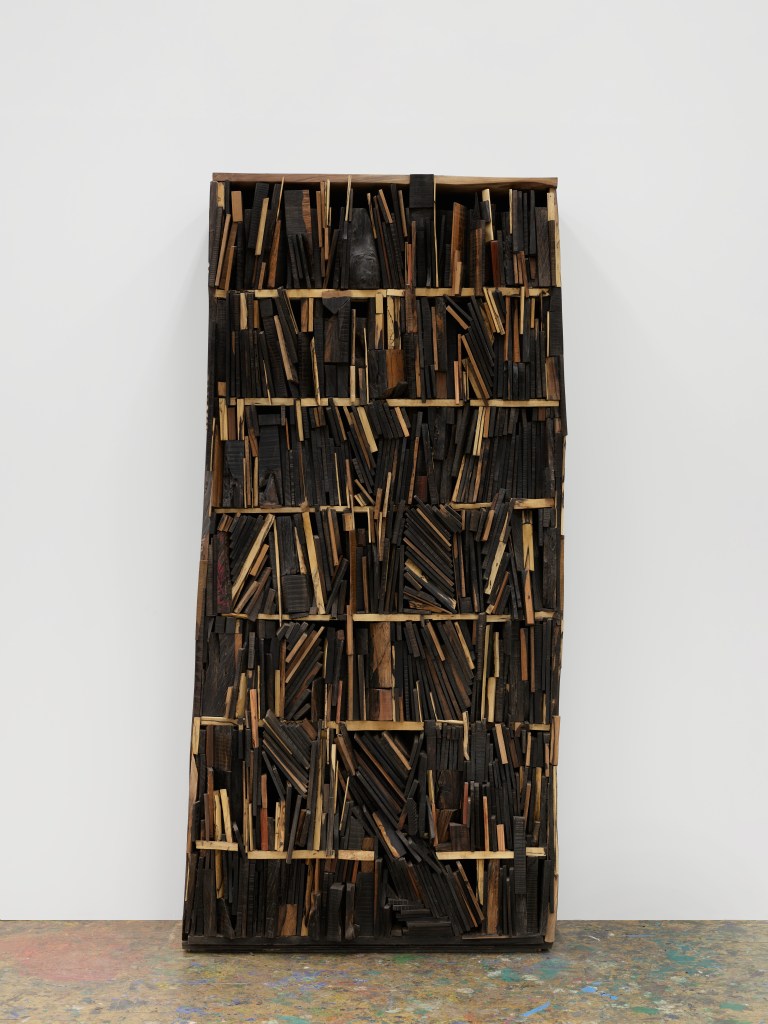
I had always intended to make a bas-relief. When I considered the human figure as a theme, I didn’t feel encouraged to do it, I wasn’t satisfied with the theme. On the other hand, I wanted to make a sculpture with a book, and I couldn’t find a way to do it either. I abandoned these projects and a few years went by. One day I walked into an antiquarian bookstore on 18th Street in New York and saw a shelf with some books arranged in a somewhat disorderly manner. That image struck me, and I told myself that that was the theme and that it was also a bas-relief. The theme of the bookstore has become a recurring theme for me.
Artwork by Manolo Valdes
2. What is the importance of books to the world, would you say?
Books are a medium that collects ideas and images. The themes are very varied: there are number books, philosophical books, novels, art books, etc. It is difficult to enter a place where you do not find them. They are artefacts that are much loved by many people. There are a variety of very different supports, but the paper book has a special appeal for me because of its textures, colors, scale… I think I will continue to have books as a theme for a while.
3. What one piece of advice would you give to young artists?
A professor at the School of Fine Arts told me that if I had something to say, I had the obligation to say it from the specificity of painting. On the other hand, Picasso said that if the muses come, they have to find you in the studio! In other words, a lot of vocation and a lot of work.
4. Who is your biggest inspiration?
I believe that painting is born from painting. My inspiration comes from the History of Art, from the paintings that others have painted. I don’t see myself putting an easel in front of a landscape or a still life like the impressionists, but I can put my easel in front of a landscape by Monet, an apple by Cezanne or the Infanta Margarita by Velazquez.
5. Martians have come to planet earth and you have been tasked with showing them one work of art that, for you, sums up humanity. It can be from any epoch. Which artwork do you choose?
Fortunately, the Martians have not arrived, and I don’t think they will arrive soon. In any case, humanity is defined by the first drawings from prehistory to the most recent paintings. I am very impressed by the Pyramids of Egypt, the Sistine Chapel, the paintings of Rembrandt, Velazquez, Matisse, Picasso…The other day I visited the British Museum, and I came out completely confused because I couldn’t decide which works interested me most in the amount of what was on offer. The next day I went to the National Gallery and the same thing happened to me.
6. What is your next project?
A: I am working on large-scale sculptures for outdoor exhibitions. I have finished one that has been installed in Miami and another for the Singapore Botanical Gardens. Other works will be shown in Monaco in the autumn.
For more information about Manolo Valdes, see his page on the website of Opera Gallery, where he had his show The Library
Neil Crombie is the co-founder and creative director of SwanFilms and a double BAFTA-winning director, producer and executive producer. Here, he speaks to culture writer Frances Forbes-Carbines.
How many submissions of artwork are you expecting for this series?
Last year we got around ten thousand submissions: we anticipate a higher figure this time around. We’re more organised this year — last year we set up the show in the height of lockdown, in a period of a couple of weeks. There’s a special dedicated website, Grayson’s Art Club.com, so that submitting artwork is easier; we’ll get a lot more engagement in terms of people submitting work as well as just watching the programme.
Has the volume of submissions made you think differently about arts programmes?
Making the series has been a lesson for us when thinking about the different ways in which arts programmes inspire and engage the public. It was really interesting to see how much appetite there was from members of the TV-viewing audience to engage with an arts programme in lockdown. It made me think: what are the barriers to entry of other arts programmes that were preventing people from wanting to engage?
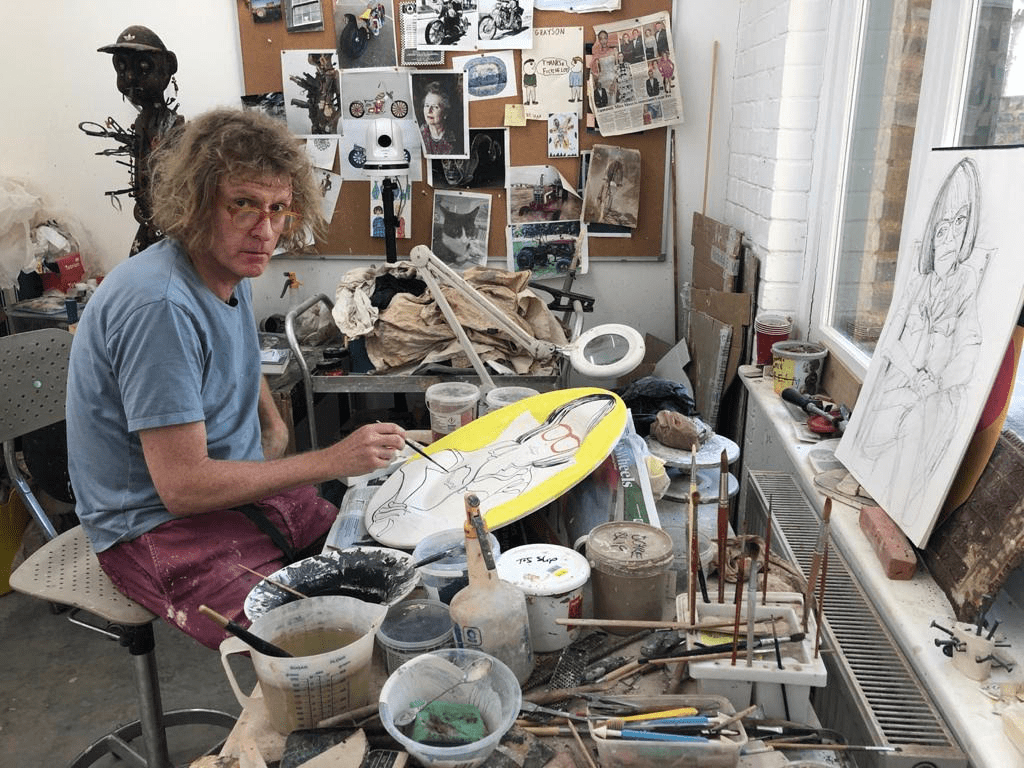
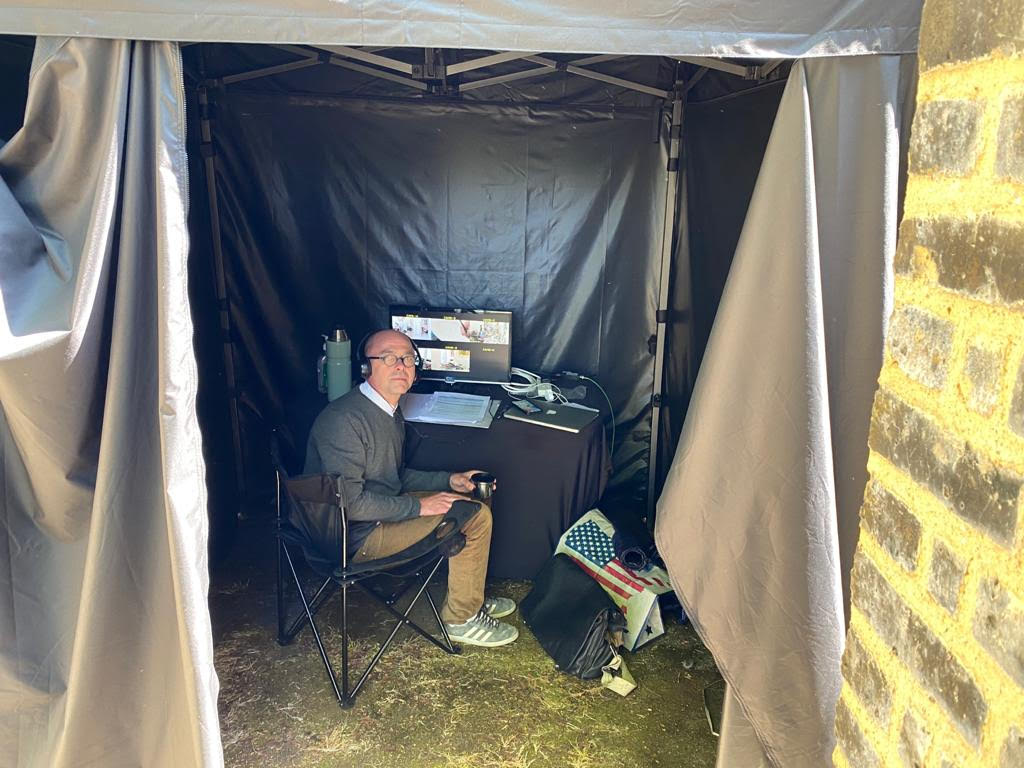
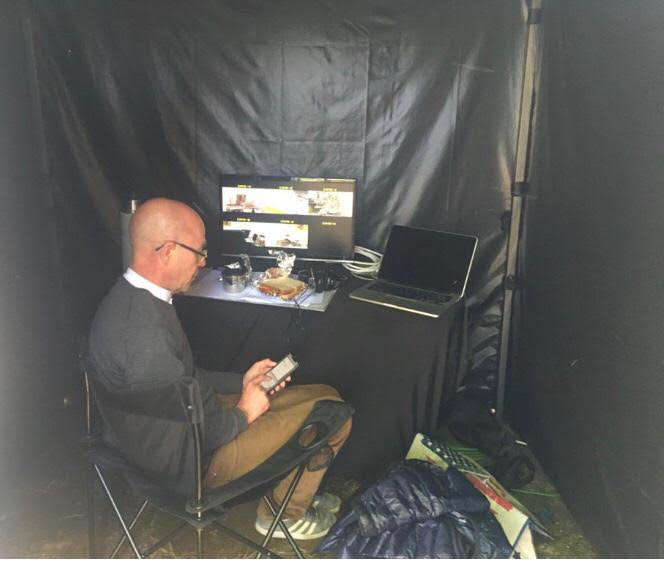
On set
What might prevent people from wanting to engage in arts programmes?
People watching Grayson’s Art Club would see that we weren’t doing what most arts programmes on television do, that is to say, we weren’t evaluating the art. Most arts programmes are basically an exercise in critical evaluation by an expert, for example, someone will say late Picasso is better than early Picasso; that Matisse is an inferior artist to Picasso, or that the Renaissance is way better than Mannerism.
I’m not saying that’s wrong—that’s really important and valuable—but [for us] we decided that we weren’t going to do that at all and what we were interested in was the why of why they’ve made it, what it told them about their lives, their story, the experiences they were having right now. I think that gave people a sort of permission to engage with the programme that they perhaps wouldn’t have had before.
Is it wrong to evaluate?
It became clear that we weren’t saying that it’s wrong to evaluate, or that we just weren’t interested in the question. The question we were interested in is, “how could people share their experiences of what they were going through and their lives with everyone else, through the medium of art?” The art was a sort of bridge to people feeling able to share their story and their experience with everybody else. And I think that’s what people picked up on: the absence of critical judgement about it, parking all of that and just saying “That’s not the exercise we’re engaged in”.
How did last year’s series come about?
In late February last year, it was clear that there was going to be a lockdown. I remember talking to Grayson about what we were going to do about the lockdown. Grayson’s always been someone who has stood for the democratisation of art: he’s always very keen to talk about his art in the most accessible way possible, and to engage a broad audience in his art and in art generally. I said, “Well, you’ve got to put your money where your mouth is—if people are going to be stuck at home, why don’t we try to get them making art?”
Tell me about production: how do you make this kind of series?
We were quite inventive about how we did it. It’s relatively inexpensive—a lot of it’s done through Zoom. The contributing artists and celebrities tend to get their households to make the film of either them or someone in their studio. Crucially, these technologies and methods give a feeling of solidarity among viewers, viewers who submit art and the celebrities involved. Everyone’s in lockdown and at home. We’re keeping all of that for the next two years and we’re not changing it in any sort of radical way. I think it’s very important that you feel that Grayson and Philippa, and everyone talking on the programme, are in the same boat as you are. We’re all going through a point in history that we will want to look back on.
Grayson and his guests are selecting work sent in by the public. Some of it will appear in an exhibition, eventually, at some point, in the real world. We made a special episode of the series last year about the creation of the exhibition at Manchester Art Gallery. When we first embarked on the programme we’d thought about making an exhibition of people’s artworks, but hadn’t thought through what the reality of that would be.
What was it like to work with Manchester Art Gallery?
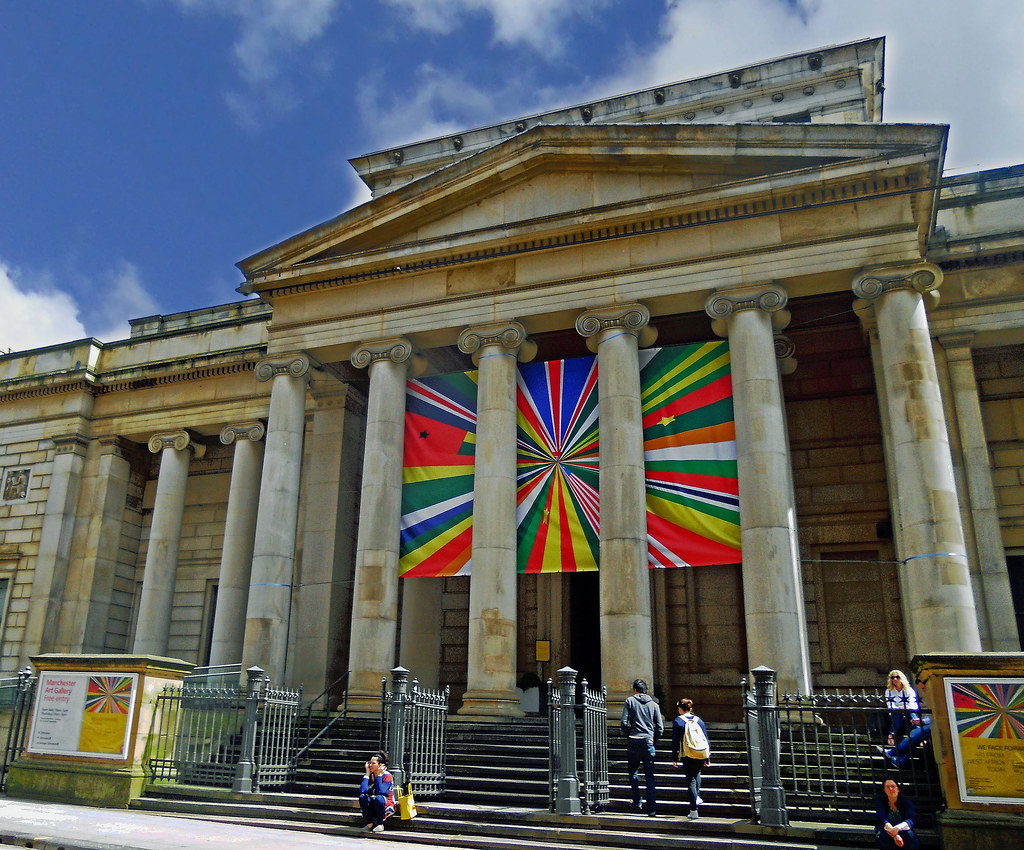
It was an honour to work with Manchester Art Gallery, the amazing, prestigious, very beautiful grand Victorian institution in the heart of the city. It’s a fantastic place where they do great work, and the curator created a really beautiful show—it has not yet been able to open to the public. There’s a sort of irony about that: an exhibition of lockdown art that can’t open just yet, but will eventually. That’s been really instructive: you suddenly think that there’s another yardstick to evaluate the success of a programme like ours, which is that things happen in the real world because of it.
Manchester Art Gallery
Will this have wider implications?
I feel that this exhibition should help really kickstart the cultural scene in Manchester when it’s able to open, as all of the institutions in the city have really struggled to have a big headline exhibition that will really bring the public in. This is really important to the cultural scene in Manchester: public engagement and representation in the art world.
What they want from television is that feeling that we’re creating communities around ourselves, around something we’re all watching together. That’s an actual experience of community, as opposed to just passively watching a programme.
What is distinctive about Grayson’s Art Club?
I think that Grayson’s Art Club is popular because it’s a club, as much as because it’s about art. Call it a club that everyone’s welcome to join, to which everyone can send in their art and who knows, they might end up in a really prestigious art gallery in Manchester if they have a go. And even if they don’t, that feeling permeates everything that we do. Inclusivity. Freedom. Creativity. We want to build on these values this year.
How much do we need the arts?
I feel that Grayson’s Art Club is a window to the vital importance of art: lockdown made people realise how much they get out of art. Making art at home in some ways compensates for not being able to experience art in a gallery. It engages people in a meaningful and beneficial activity.
We know that the public benefits massively from involvement with art; that they benefit in mental health terms, they benefit in terms of communal experience, they benefit educationally. We know that now we’ve proven its importance in even the darkest and most difficult times.
The nebulous concept that art is for the public good has been definitely proven in the Covid-19 crisis. Terrible times prove how much we need the arts.
 Cultural Capital